


Why Are Lab Grown Diamonds So Much Cheaper? The Real Explanation

Editorial standard: Carat Theory editorial policy. Co-Founder: Sahil Meghani.
The real reason
A lab-grown diamond can cost materially less than a mined diamond of comparable quality. The first reaction is often the same: where is the catch? There usually is not one. The reason is about production scale and supply chain, not the diamond being fake.
Here is a simple picture. A greenhouse tomato and a wild tomato picked off a mountain are the same tomato. One costs more because it is hard to find and move, not because it tastes better. Diamonds work the same way. The stone is identical. What changes the price is the distance it travelled to reach you.
Where a mined diamond's price actually goes
When you pay for a mined diamond, a large share of the price has nothing to do with the stone itself:
| Cost | Mined diamond | Lab-grown diamond |
|---|---|---|
| Mining | Tonnes of rock per carat | None |
| Chain of middlemen | Long (mine, cutter, wholesale, retail) | Short |
| Managed scarcity | Controlled supply, price premium | None |
| Marketing legacy | Decades of advertising | Minimal |
| The stone itself | Crystallised carbon | The same carbon |
A lab-grown diamond forms in a few weeks, with no mine and a far shorter chain. You strip out the cost of scarcity - not the cost of beauty.
You are not paying for a lesser stone. You are no longer paying for everything wrapped around the stone.
Is "cheaper" a red flag?
No. A lab-grown diamond is a real diamond: same carbon structure, same hardness, and the same diamond category. IGI grades lab-grown diamonds by the same criteria as mined diamonds and discloses laboratory-grown origin. The lower price reflects a different way to make and distribute the stone, not a fake stone.
If you want to move from the explanation to real numbers, read our guide to diamond prices in Canada and the Canadian lab-grown diamond price index.
What the savings buy you
This is the genuinely good part. At the same budget, the price gap leaves you two options, both of them wins:
More stone
- A better cut, which is what creates sparkle.
- Higher colour or clarity.
- More presence on the hand.
Or more in your pocket
- Solid gold instead of plated.
- A better-made setting.
- Simply, money kept.
Our take
A lab-grown diamond is not a budget version. It is the same product without the scarcity premium - exactly the kind of choice we stand for. Put the savings where they show: cut, colour, solid gold. That is how a sensible budget produces a ring that looks anything but sensible.
 The saving, wornThe same crystal, without the markup this article explains.The Sovereign Stud$1,040.00
View →
The saving, wornThe same crystal, without the markup this article explains.The Sovereign Stud$1,040.00
View →
Frequently asked
Is a lab-grown diamond a real diamond?
Yes. It is crystallised carbon, identical to a mined diamond physically, chemically and optically. Only the origin differs.
Why do prices keep falling?
Production has improved and scaled up. As with any technology, making it better and in greater volume lowers the cost - without changing the stone.
Can you see the price difference?
No. Two diamonds of the same quality, one mined and one lab-grown, are impossible to tell apart by eye. Only specialised equipment reads the origin.
Will I lose money on resale?
Do not buy lab-grown diamond jewellery as a financial investment. Resale outcomes vary and are usually below retail purchase price.

You might also like
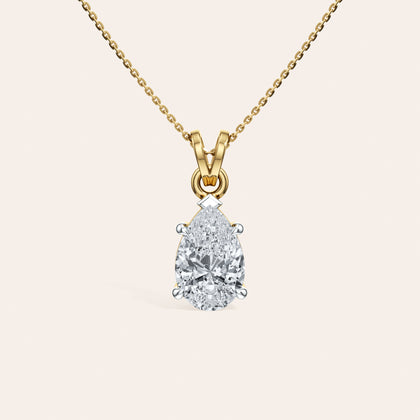
The Lumina Pendant
2.07 CT. T.W.PEAR$2,100.00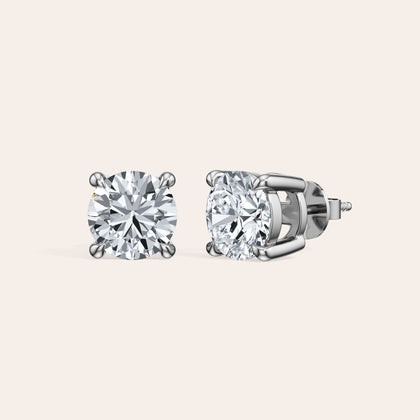
The Lumière Stud 1.5 CT
1.48 CT. T.W.ROUND BRILLIANT$1,080.00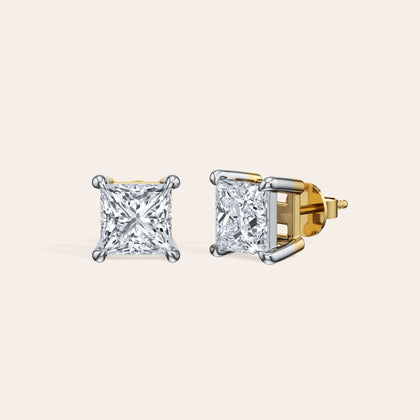
The Crest Stud
1.20 CT. T.W.PRINCESS$1,010.00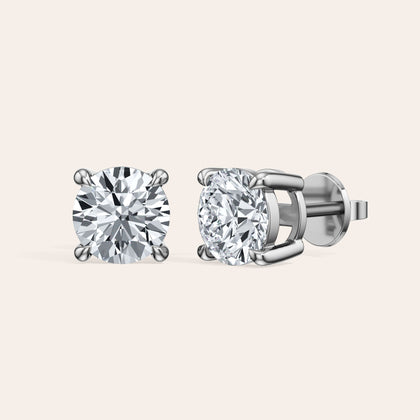
The Lumière Stud 2 CT
2.02 CT. T.W.ROUND BRILLIANT$1,400.00Complimentary shipping and free 14-day returns - decide with total peace of mind, at no cost.