


Lab-Grown vs Natural Diamonds: What Canadians Should Know

Editorial standard: Carat Theory editorial policy. Co-Founder: Sahil Meghani.
The comparison
Mined or lab-grown: it is the first question most Canadian buyers ask. The answer fits in one sentence, then in a few nuances that are genuinely worth the read.
The same stone, a different origin
A lab-grown diamond and a mined diamond are the same material: crystallised carbon, the same hardness (10 on the Mohs scale), the same brilliance and fire. IGI grades both by the same criteria. The only real difference is where the crystal formed: a controlled reactor over a few weeks, rather than the earth's mantle over a billion years. In 2018, the US Federal Trade Commission removed the word "natural" from its definition of a diamond, precisely because a lab-grown stone passes every physical test of one.
| Mined diamond | Lab-grown diamond | |
|---|---|---|
| Material | Crystallised carbon | Crystallised carbon (identical) |
| Hardness | 10 on Mohs | 10 on Mohs |
| Certification | IGI | IGI |
| Origin | Formed underground | Grown in weeks |
| Price (equal specs) | Usually higher | Often 3-5x lower |
That identity is where the interesting part starts, not ends. Since the two stones are the same material, the price difference between them has nothing to do with quality and everything to do with scarcity - and scarcity, unlike hardness or brilliance, is not a property of the diamond itself. At equal cut, colour, and clarity, a mined diamond often costs three to five times more than its lab-grown equivalent. A 1-carat solitaire ring that sits around $1,500 to $4,500 CAD lab-grown can run well past $8,000 mined, for a stone that looks identical under any light. The money saved is invisible to the eye - it stays in your pocket, or buys a larger stone. On stones we buy for our own collection, that gap is the first thing we check on an IGI report, before carat weight.
The real question is not "which is a real diamond." Both are. It is "why pay for scarcity when the light is the same."
What actually separates them
Not much, and what does separate them cuts against the obvious assumption. Neither you nor your jeweller can tell a lab-grown diamond from a mined one of equal quality by eye - only specialised lab equipment reading fluorescence and internal growth patterns can identify origin, and that finding lives on the certificate, not on the stone. No one looking at the ring will know, unless you tell them.
Where the two genuinely diverge is upstream, in how each stone came to exist. Lab-grown avoids diamond mining and the land disruption that comes with extraction. But growing, cutting, polishing, shipping, and setting a diamond still takes real energy, and the true footprint depends on the power source behind it: a reactor running on coal has a different balance sheet than one running on hydro. Neither option is impact-free. Lab-grown starts with a clear structural advantage on the extraction side, though, and that advantage only grows as power grids decarbonize - it is a trend line, not a fixed number.
Which one is right for you
A lab-grown diamond has the same chemical and physical properties as a mined one, at three to five times less. We do not believe a buyer should automatically pay a large premium purely because a stone formed underground rather than in a reactor, which is why Carat Theory carries lab-grown only. That said, some buyers value the origin and history of a mined stone specifically - a perfectly legitimate preference, just not the one our collection is built around, and we would rather say that plainly than pretend the question does not exist.
So the practical answer comes down to what you are actually paying for. If you want the historic weight and symbolism of a stone "from the earth," and price is no barrier, mined keeps its meaning - that is a real reason, not a mistake. If you want the same diamond material, more stone for your budget, and a disclosed origin, lab-grown is the rational choice for most buyers. We made that choice for our own collection: lab-grown diamond jewellery in solid 14K gold.
 Same stone, transparent priceThe lab-grown case this article makes, in solid 14k gold.The Sovereign Stud$1,040.00
View →
Same stone, transparent priceThe lab-grown case this article makes, in solid 14k gold.The Sovereign Stud$1,040.00
View →
Frequently asked
Is a lab-grown diamond a real diamond?
Yes. Same carbon, same hardness, same brilliance, same certification. The difference is origin, not nature.
Why does it cost less?
It does not depend on mining or maintained scarcity. Supply caught up with demand, which brought prices down.
Does it scratch or cloud faster?
No. It is the hardest material there is, exactly like a mined diamond.
Is it a good investment?
Do not buy lab-grown diamond jewellery as a financial investment. Resale outcomes vary and are usually below retail purchase price.
Can a diamond tester tell lab-grown from mined?
No. The pen testers you see in shops measure thermal conductivity, and a lab-grown diamond conducts heat exactly like a mined one, so it reads diamond because it is one. Separating the two takes lab instruments that read fluorescence and internal growth patterns.

You might also like
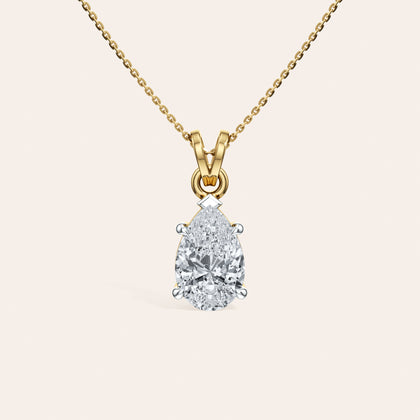
The Lumina Pendant
2.07 CT. T.W.PEAR$2,100.00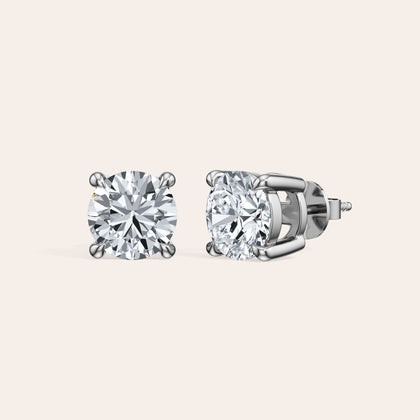
The Lumière Stud 1.5 CT
1.48 CT. T.W.ROUND BRILLIANT$1,080.00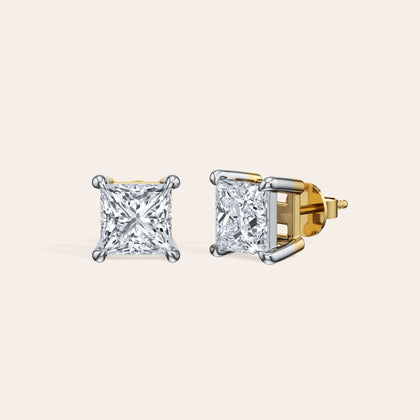
The Crest Stud
1.20 CT. T.W.PRINCESS$1,010.00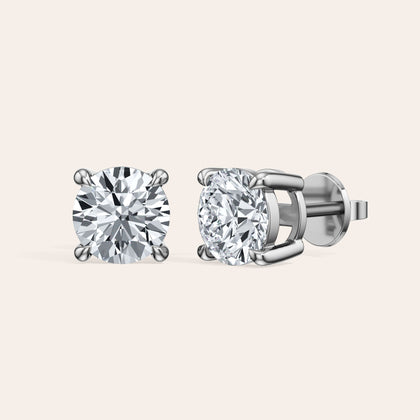
The Lumière Stud 2 CT
2.02 CT. T.W.ROUND BRILLIANT$1,400.00Complimentary shipping and free 14-day returns - decide with total peace of mind, at no cost.