


IGI vs GIA Canada: Which Certification Matters for Lab-Grown Diamonds

Editorial standard: Carat Theory editorial policy. Co-Founder: Sahil Meghani.
The labs
IGI and GIA are the two names you will see most on a diamond certificate. Both are independent, respected labs. The real question is not "which is better," but "what does it change for you, in 2026, on a lab-grown diamond bought in Canada."
Who's who
GIA (Gemological Institute of America), founded in 1931, invented the 4Cs scale and remains the historic benchmark for mined diamonds. IGI (International Gemological Institute), founded in Antwerp in 1975, now certifies the large majority of the world's lab-grown diamonds. What they share is the only thing that truly matters: neither one works for the seller.
What changed in October 2025 (and most sellers still haven't caught up)
Here is the detail most guides still have not updated. GIA announced in June 2025, and put into effect on October 1, 2025, that it would stop grading lab-grown diamonds on the same colour (D to Z) and clarity scale it uses for mined stones. Its reasoning: more than 95% of lab-grown diamonds cluster in a very narrow band of colour and clarity, which made the fine-grained scale largely meaningless. GIA now describes them with two tiers instead: "Premium" and "Standard."
The bar for each tier is specific, not vague marketing language. To earn Premium, a stone must meet every one of: D colour, VVS clarity or better, and Excellent polish, symmetry, and cut (round brilliants only). Standard covers E-J colour and VS clarity or better, with Very Good polish and symmetry. A lab-grown diamond that misses even the Standard bar does not receive a GIA report at all.
In practice: an IGI report still gives you a specific colour and clarity (F, VS1, and so on), while a GIA lab-grown report issued after October 2025 gives you one of two broad tiers instead. So if you want to compare two stones down to the last shade, IGI remains the more common - and more legible - language in the lab-grown world.
| GIA | IGI | |
|---|---|---|
| Founded | 1931, United States | 1975, Antwerp |
| Benchmark for | Mined diamonds | Lab-grown diamonds (global volume) |
| Lab-grown grading | Two tiers since Oct 2025: Premium (D colour, VVS+) or Standard (E-J, VS+) | Full colour and clarity (D-Z, IF-I) |
| Grading reputation | Reputed very strict | Reliable; independent comparisons sometimes place it a touch more lenient on colour |
| The real test | An independent third party graded the stone, not the seller | |
The certificate is not for comparing two brands. It is for proving the stone is exactly what you are told it is.
Does the lab change the price?
A little, and rarely for good reasons. GIA-certified lab-grown diamonds are scarcer and sometimes sell for a small premium - not because the stone is better, but because the report carries a name the public knows. For equal real-world quality, paying extra for the logo makes no sense. Pay for the stone, not the acronym.
What it means for a Canadian buyer
In Canada, IGI is one of the most common lab names you will see on lab-grown diamond jewellery, and it can be perfectly trustworthy. Two habits are worth keeping: always compare two stones within the same lab (a G colour is not guaranteed identical from one lab to the next down to the last shade), and confirm the report number exists and matches before you buy. At Carat Theory, every diamond over 0.50 carat includes its own independent IGI certificate; smaller accent diamonds are certified by IGI together at the jewellery level. When we evaluate a stone for our own collection, that report-number check happens before any price discussion, not after.
How to read the certificate before you buy
Go to the lab's official site (igi.org or gia.edu), enter the report number, and check five lines against what the seller states:
- Shape - round, oval, pear, and so on, matched to the listing photo.
- Carat weight - to two decimal places, not rounded.
- Colour and clarity - a specific grade on IGI; Premium or Standard on a post-October-2025 GIA lab-grown report.
- Cut, polish, and symmetry - the factors that actually create sparkle.
- Measurements - millimetre dimensions, useful for confirming the stone's real proportions.
For a lab-grown stone specifically, ask whether the growth method (CVD or HPHT) is noted - IGI will include it on request, and a seller who cannot answer the question at all is worth a second look. If any line does not match, or the report number does not exist on the lab's own site, stop there and ask before paying.
Which one to choose
Do not choose a diamond for the logo on its certificate. Choose it for its cut, its light, and how it makes you feel - then confirm the report, IGI or GIA, is genuine and matches. It is the verification that counts, not the brand. For the fuller picture beyond certification alone, see our diamond education guide.
 IGI documentation where it mattersIndividual IGI certificates for diamonds over 0.50 carat; jewellery-level IGI certification for smaller accents.The Crest Stud$1,010.00
View →
IGI documentation where it mattersIndividual IGI certificates for diamonds over 0.50 carat; jewellery-level IGI certification for smaller accents.The Crest Stud$1,010.00
View →
Frequently asked
What is an IGI diamond?
An IGI diamond is one graded and certified by the International Gemological Institute - an independent, ISO 17025-accredited lab that verifies shape, weight, colour, clarity, and cut, and does not buy, sell, or trade diamonds itself. IGI certifies both mined and lab-grown stones.
What does "IGI certified" actually guarantee?
That an independent third party, not the seller, verified the stone matches what is described. It does not guarantee a good price or a well-made setting - those are separate questions worth checking on their own.
What does "IGI certified lab-grown diamond" mean specifically?
The same independent verification, applied to a lab-grown stone. IGI still issues a full colour and clarity grade for lab-grown diamonds, unlike GIA's post-October-2025 Premium/Standard tiers, which is a large part of why IGI remains the most common lab for lab-grown stones worldwide.
Is IGI less reliable than GIA?
No. It is an independent lab recognised worldwide, and the benchmark for lab-grown diamonds. Reliability comes from verifying the report, not from the logo.
Did GIA really stop grading lab-grown colour and clarity?
Yes, as of October 1, 2025 (announced that June). GIA moved to two tiers - Premium and Standard - for lab-grown diamonds, judging that the mined-diamond scale was no longer meaningful for them. IGI still issues detailed colour and clarity grades.
Is an IGI-certified diamond worth less than a GIA one?
For equal real-world quality, no. A GIA report can sell for a small premium out of scarcity, but the stone itself is not superior.
How do I verify a certificate?
Enter the report number on the lab's official website. The details should match the stone being sold exactly.

You might also like
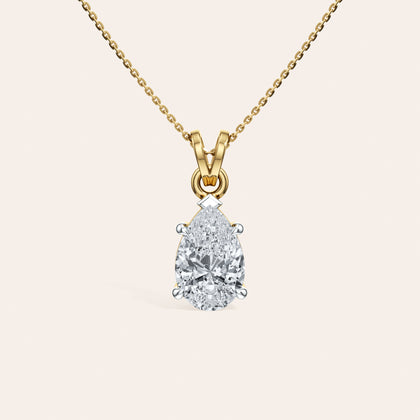
The Lumina Pendant
2.07 CT. T.W.PEAR$2,100.00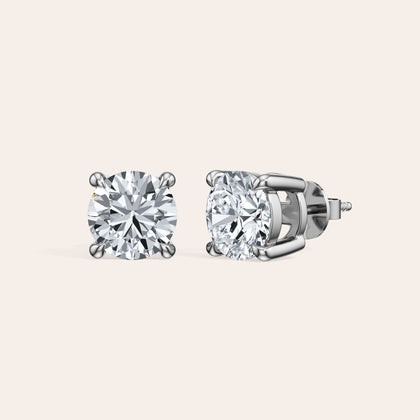
The Lumière Stud 1.5 CT
1.48 CT. T.W.ROUND BRILLIANT$1,080.00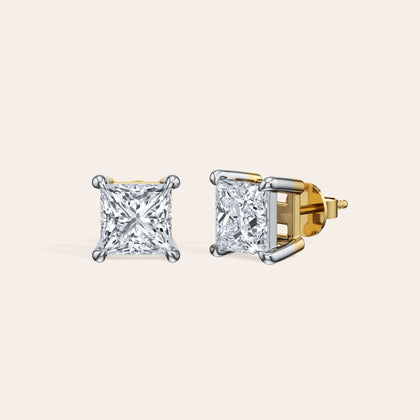
The Crest Stud
1.20 CT. T.W.PRINCESS$1,010.00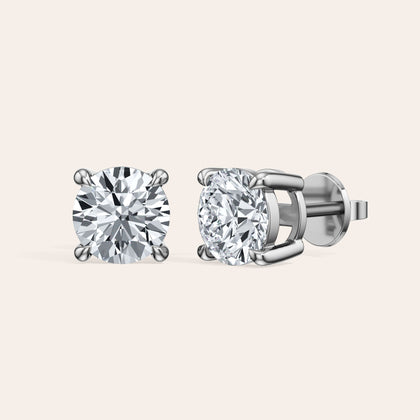
The Lumière Stud 2 CT
2.02 CT. T.W.ROUND BRILLIANT$1,400.00Complimentary shipping and free 14-day returns - decide with total peace of mind, at no cost.