


Why Oval Diamonds Became So Popular - And Why the Shift Makes Sense

A shape, a story
In just a few years, the oval went from a quiet option to one of the most requested shapes for an engagement ring. It is not a fashion accident: the oval solves several problems at once.
It looks bigger
This is its decisive advantage. At the same weight, an oval presents a larger face-up surface than a round: it "wears" more carats than the scale says. For the same budget, the stone simply looks bigger on the hand.
It flatters the hand
Its length visually lengthens the finger and slims the hand. It is a generous shape without being overbearing - exactly the compromise many people are after.
The oval has the brilliance of a round and the presence of a larger shape. That is the reason for its success in one sentence.
It sparkles almost like a round
Unlike step cuts such as the emerald, the oval is a brilliant cut: it returns a lot of light and hides small inclusions better. So you keep the round's sparkle while gaining the presence of an elongated shape.
Watch for: the bow-tie effect
Every oval has a darker zone across the centre, shaped like a bow-tie. On a good cut it is subtle; on a poor cut it is obvious. It is the one thing to check - and another reason to favour cut quality.
Settings that flatter an oval
The oval is versatile, but a few settings show it off especially well:
- Solitaire with V-prongs at the points: they protect the tips and slim the silhouette further.
- Fine pave band: small diamonds along the shank amplify the sparkle without upstaging the stone.
- Subtle halo: a ring of small stones adds half a size of presence - useful on tighter budgets.
- East-west setting: the oval laid sideways across the finger, a modern, sought-after orientation.
How to wear it day to day
On the hand, the oval lengthens the finger - flattering on almost every hand shape. For stacking, a fine straight band follows its curve well; a contoured band nests against the point for a custom look. Worn lengthwise it elongates; worn east-west it makes a quiet statement.
Frequently asked
Does an oval really look bigger than a round?
Yes. At the same weight, its face-up surface is larger, so it looks bigger on the hand.
Is the oval a passing trend?
Its strengths - looking bigger, flattering the hand, sparkling - are lasting. It has become a modern classic more than a trend.
What ratio should I choose?
A length-to-width ratio of about 1.35 to 1.50 is the most balanced for most tastes.
What wedding band pairs with an oval ring?
A fine straight band follows the curve; a contoured band nests against the point. Both work - it is a matter of taste.
Does an oval suit shorter fingers?
Very well - it is one of its strengths: the length visually stretches the finger.
Read next: Shapes and cuts · Compare shapes

You might also like
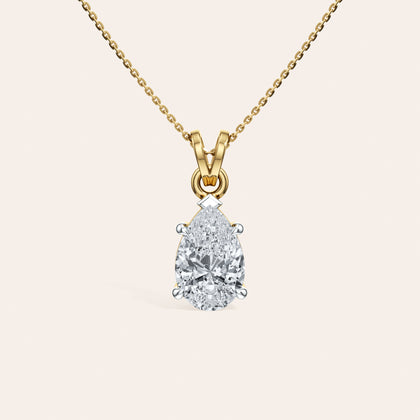
The Lumina Pendant
2.07 CT. T.W.PEAR$2,100.00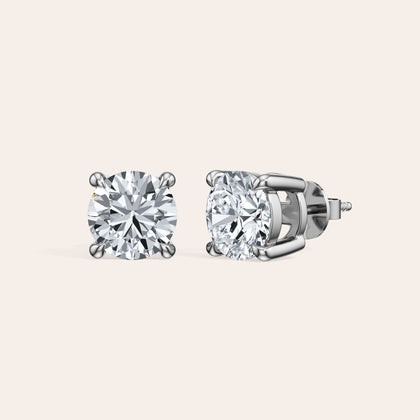
The Lumière Stud 1.5 CT
1.48 CT. T.W.ROUND BRILLIANT$1,080.00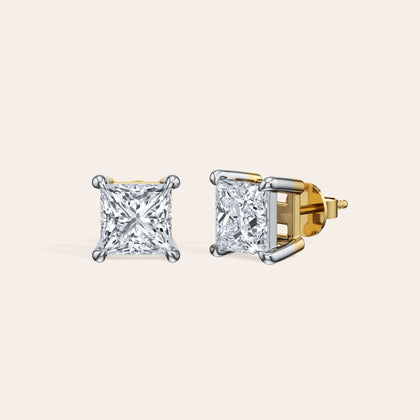
The Crest Stud
1.20 CT. T.W.PRINCESS$1,010.00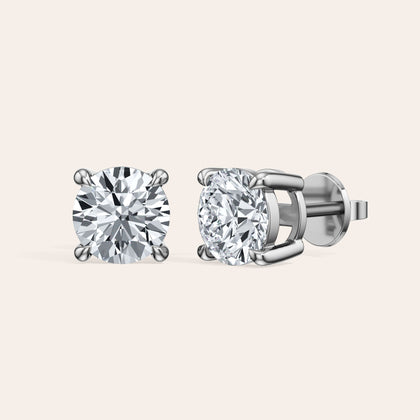
The Lumière Stud 2 CT
2.02 CT. T.W.ROUND BRILLIANT$1,400.00Complimentary shipping and free 14-day returns - decide with total peace of mind, at no cost.