


Diamond Shapes & Cuts: A Complete Guide

Diamond shape refers to the outline of the stone - round, oval, cushion, pear, and so on - and it changes sparkle, apparent size, durability, and mood. This diamond shape guide compares round, oval, emerald, cushion, pear, princess, marquise, radiant, trillion, heart, and baguette cuts so you can choose the silhouette that fits the jewellery you will actually wear.
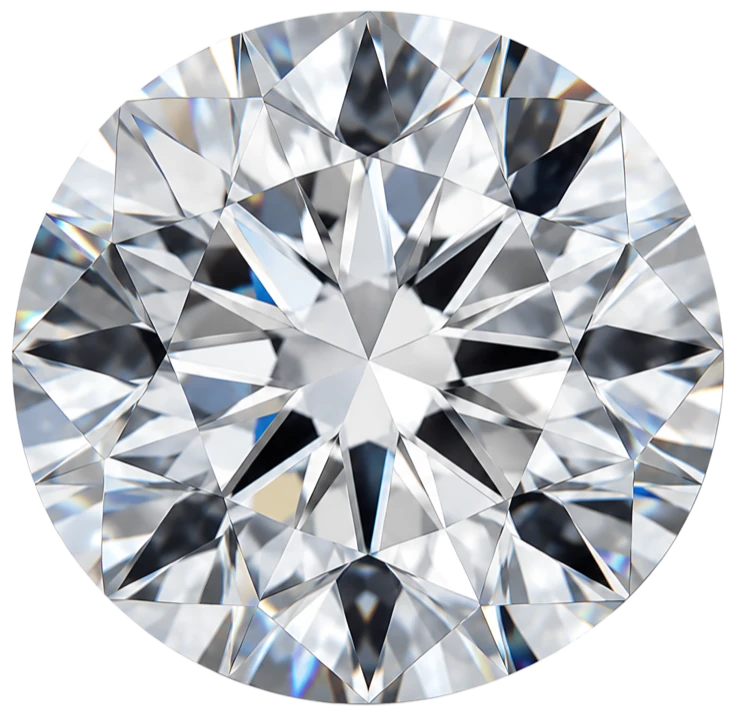
Brilliant
Round Cut Diamonds
The original brilliant cut: 57 to 58 facets engineered to return maximum light, with no bow-tie effect thanks to its perfect symmetry. It has no sharp corners to protect, making it one of the easiest shapes to wear every day.
Compare: Round vs Oval › Round vs Princess ›
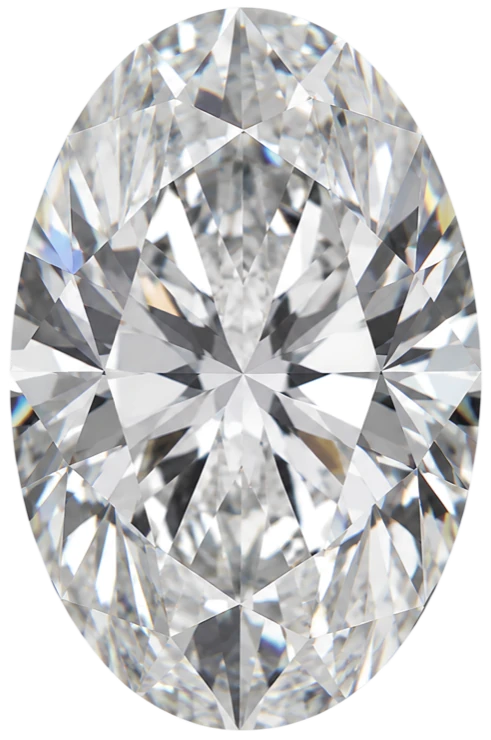
Brilliant
Oval Cut Diamonds
A brilliant facet pattern stretched into an elongated silhouette, which looks larger than a round of the same carat and lengthens the finger. Check for even brilliance and a minimal bow-tie at the centre - with no sharp corners, it wears as easily as a round.
Compare: Round vs Oval › Oval vs Emerald ›
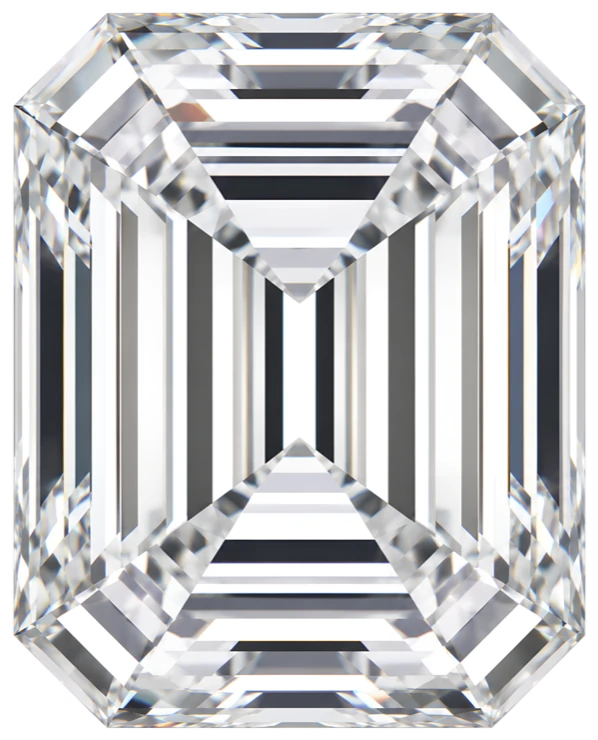
Step cut
Emerald Cut Diamonds
A step cut with a large open table and trimmed corners: less fire, but a clean, mirror-like flash instead of scattered sparkle. Because the table is so open, eye-clean clarity matters more here, and a setting with corner-covering prongs is recommended.
Compare: Emerald vs Radiant › Oval vs Emerald ›
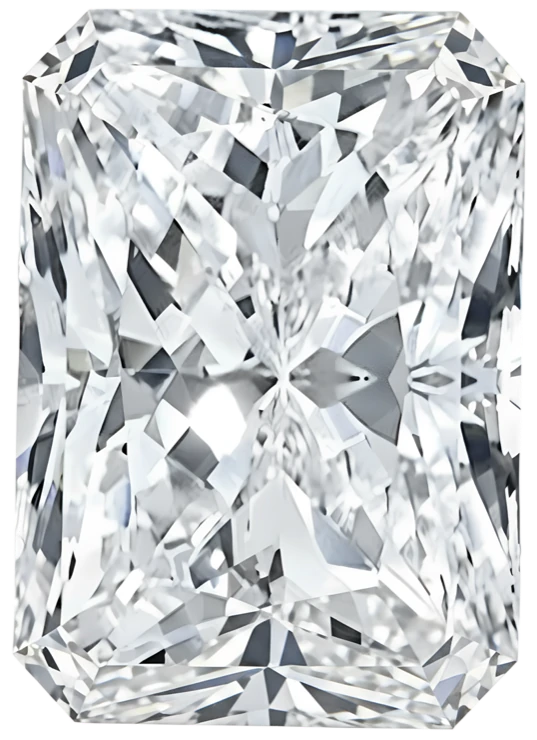
Brilliant
Radiant Cut Diamonds
A brilliant facet pattern inside a trimmed-corner rectangle: the silhouette of an emerald cut with the sparkle of a round. Its cropped corners make it durable and easy to set, without a sharp point's fragility.
Compare: Emerald vs Radiant ›
Brilliant
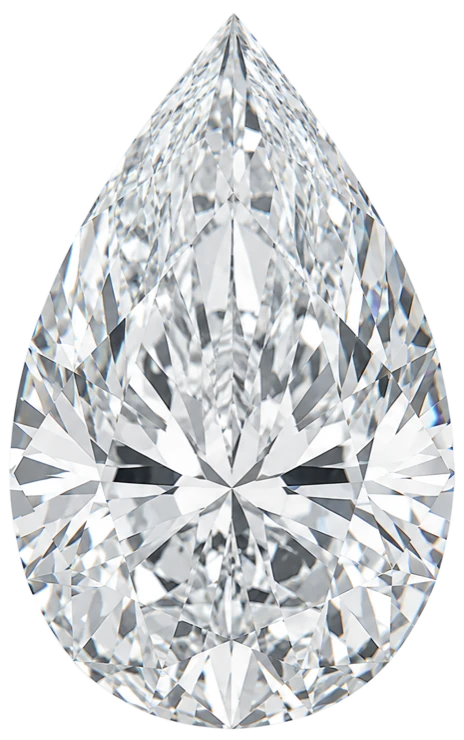
Pear Cut Diamonds
A teardrop between round and marquise: a point on one side, a curve on the other, graceful and elongating on the hand. It can show a slight bow-tie near the point, which is worth protecting with a guarding prong or bezel.
Compare: Pear vs Marquise ›
Brilliant
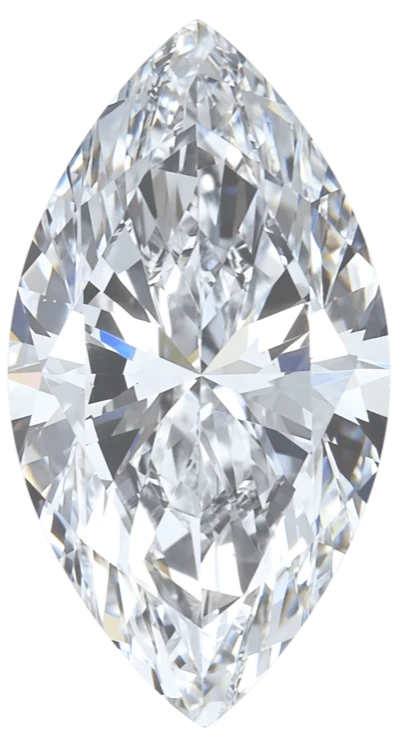
Marquise Cut Diamonds
An elongated cut with two pointed ends: its large surface gives it one of the biggest face-up sizes per carat, for a dramatic look. It can show a bow-tie at the centre, and both points need protective prongs.
Compare: Pear vs Marquise ›
Brilliant
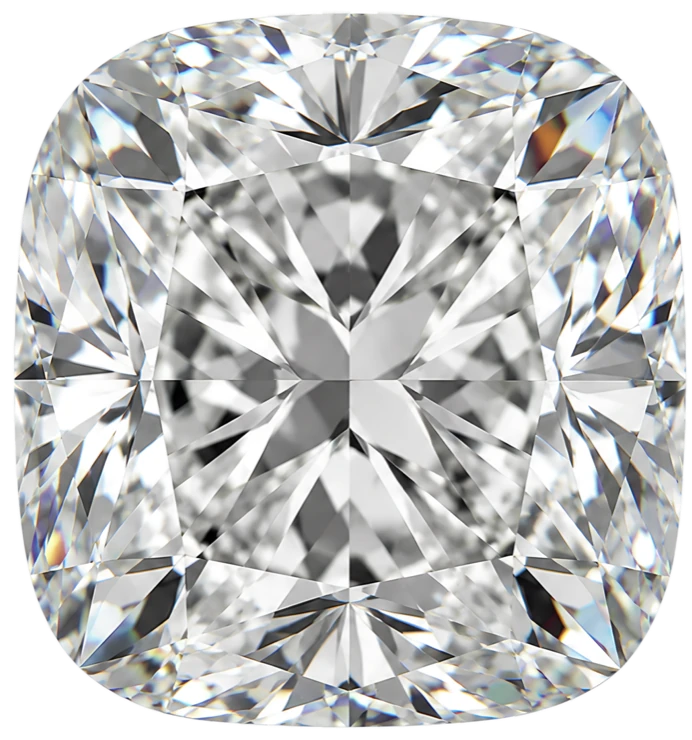
Cushion Cut Diamonds
A square-to-rectangular cut with softly rounded corners, named for its pillow-like outline: a warm, vintage character with a soft, glowing sparkle. With no sharp corners, it holds up well to everyday knocks.
Compare: Princess vs Cushion ›
Brilliant
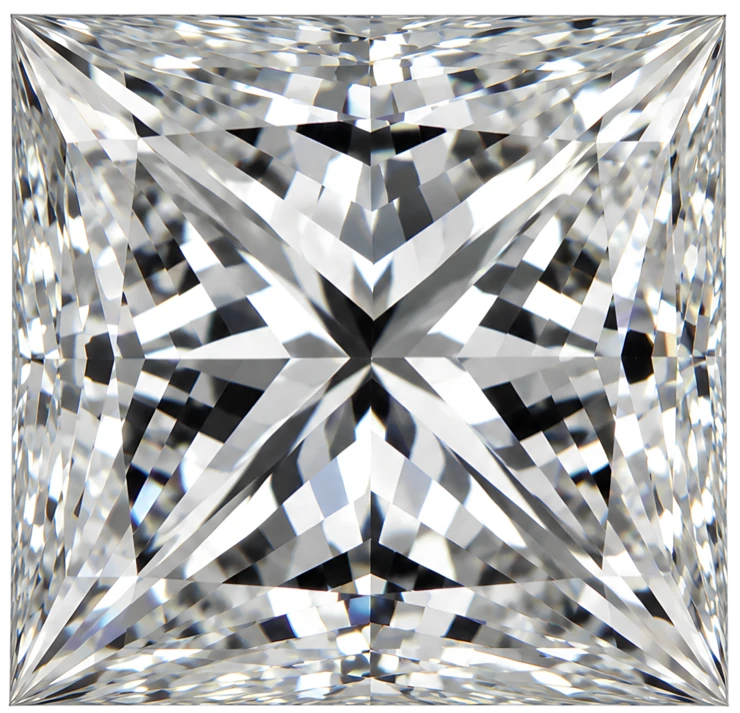
Princess Cut Diamonds
A square brilliant cut with sharp, untrimmed corners: crisp and modern, with strong brilliance for its carat and a more efficient cut than round. Its four pointed corners are worth protecting with corner-covering prongs.
Compare: Princess vs Cushion › Round vs Princess ›
Brilliant
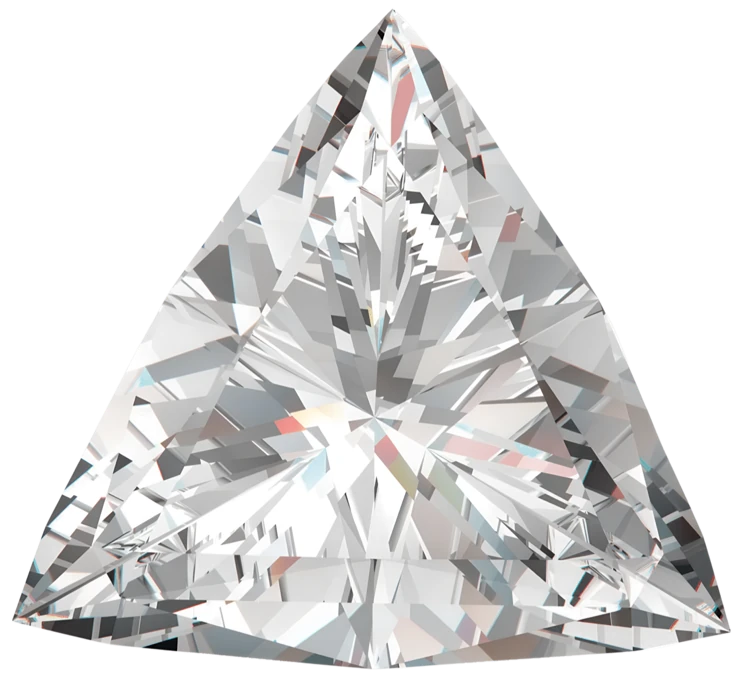
Trillion Cut Diamonds
A wide, shallow triangular brilliant, generous for its weight and bold in shape. It's most often cut as an accent stone rather than a center stone, and its three sharp corners need a protective setting.
Brilliant
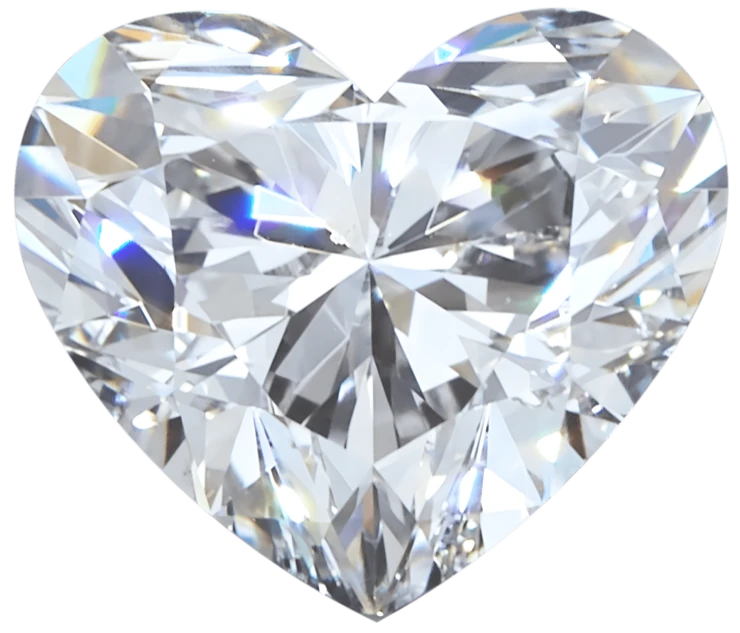
Heart Cut Diamonds
A modified heart-shaped brilliant, defined by a crisp cleft and two matching lobes: symmetry is essential, and the outline generally reads more clearly as size increases. Both the cleft and the point are worth protecting with the setting.
Step cut
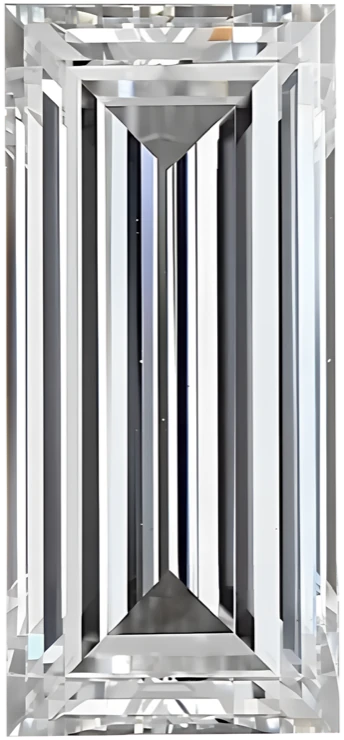
Baguette Cut Diamonds
A narrow step cut with clean Art Deco lines: with few facets, it reads sleek and minimal, which is why it's most often loved as a channel-set accent framing a center stone.
 Shapes, in personSee how a shape reads on a real piece, not a diagram.The Lumina Pendant$2,100.00
View →
Shapes, in personSee how a shape reads on a real piece, not a diagram.The Lumina Pendant$2,100.00
View →
Choosing a Diamond Shape for a Ring
A ring lives differently than earrings or a pendant - it catches doors, gloves, and keyboards every day. Two things matter more here than for any other piece. First, durability: shapes without a sharp point - round, oval, cushion, radiant, emerald - hold up best to daily knocks; pointed shapes like pear, marquise, princess, and heart are worth protecting with a setting built for them (V-prongs or a reinforced head). Second, how it reads on the hand: an elongated shape like oval or marquise visually stretches the finger and looks larger for the same carat weight, while round remains the most timeless choice and the easiest to match to any setting, solitaire or pave. Round and oval remain common choices because they suit almost any setting style, but none of the eleven shapes above is a bad choice with a well-proportioned cut and a setting built around it.
Which Shape for Which Piece
Beyond the ring, the right shape mostly comes down to how the piece is worn and how it moves.
Stud Earrings
Round catches light from every angle and pairs with any outfit. Cushion brings a softer, more vintage warmth without losing sparkle.
Shop solitaire studs ›Pendants
A vertical shape like oval or pear elongates naturally on a chain and catches light as it moves, unlike a symmetrical round that reads more static at the neckline.
Shop solitaire pendants ›Maximum Sparkle
If sparkle is the priority, choose a brilliant cut - round, oval, cushion, princess, radiant. Their faceting is built to return the most light.
Compare shapes ›Maximum Apparent Size
If looking larger for the same carat weight is the priority, choose an elongated shape - marquise, oval, pear, emerald. They cover more visual surface area per carat than a round.
Shop necklaces ›Frequently asked questions
Why is the round brilliant such a common choice?
Its faceting is engineered specifically to return the most light of any shape, and its symmetry suits almost any setting style. Among elongated shapes, oval offers strong brilliance in an elongated silhouette.
Which diamond shape looks the largest?
Elongated shapes look largest for their carat weight. The marquise has one of the largest face-up sizes per carat, followed by oval, pear, and emerald.
Which diamond shape sparkles the most?
The round brilliant sparkles the most. Other brilliant cuts such as oval, radiant, cushion, and princess also sparkle strongly, while step cuts like emerald and baguette trade sparkle for a clean, glassy shine.
Which diamond shapes are the most durable?
Shapes without sharp points are the most durable for daily wear, including round, oval, cushion, radiant, and emerald. Pointed shapes like pear, marquise, princess, and heart benefit from a protective setting.
What is the best diamond shape for an engagement ring?
There is no single best shape; it comes down to taste, hand shape, and setting. Round and oval are common choices because they suit almost any setting, but every shape can be beautiful with a strong cut.
Which diamond shapes work best for rings?
Shapes without a sharp point - round, oval, cushion, radiant, emerald - hold up best to the daily knocks a ring takes. Pointed shapes like pear, marquise, princess, and heart are still beautiful choices, as long as the setting protects the points.
Every Carat Theory diamond over 0.50 carat carries its own individual IGI report; smaller accent diamonds are certified together at the jewellery level. All are lab-grown, set in solid 14K gold. Explore diamond shapes across a made-to-order ring, diamond earrings, diamond necklaces, and diamond bracelets. Comparing two shapes? Read the diamond shape comparison guide. Shape is only part of the story - see the guide to diamond quality beyond the basics.
You might also like
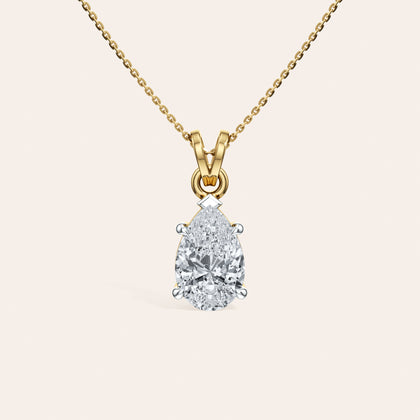
The Lumina Pendant
2.07 CT. T.W.PEAR$2,100.00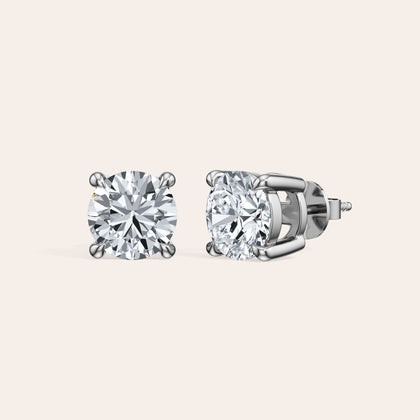
The Lumière Stud 1.5 CT
1.48 CT. T.W.ROUND BRILLIANT$1,080.00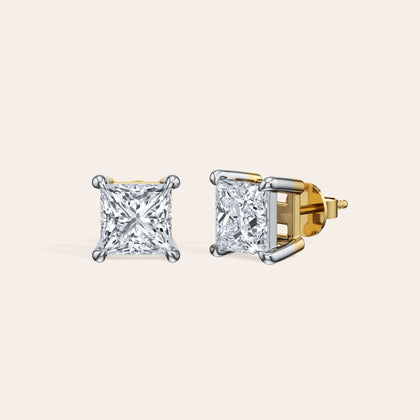
The Crest Stud
1.20 CT. T.W.PRINCESS$1,010.00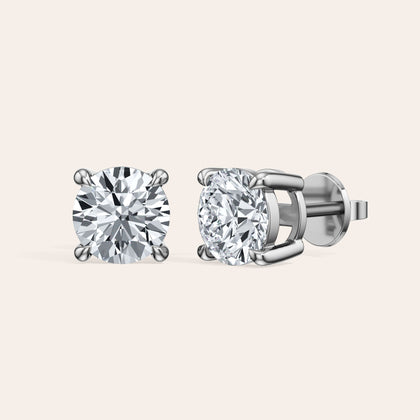
The Lumière Stud 2 CT
2.02 CT. T.W.ROUND BRILLIANT$1,400.00Complimentary shipping and free 14-day returns - decide with total peace of mind, at no cost.