


14K Solid Gold vs 14K Gold Plated Jewellery: What You Are Actually Buying

Materials, made simple
The word "gold" hides the most expensive difference in jewellery. "Solid 14k gold" and "14k gold plated" can look alike on a product page, yet one lasts decades and the other lasts seasons.
Short answers
- Is 14k gold plated real gold? It contains real gold, but only as a thin surface layer over another metal. It is not solid 14k gold.
- What does 14k mean? Purity: 14 parts in 24 are gold (58.5%). It says nothing about colour or whether the piece is plated, so look for the word "solid".
- 14k gold vs 14k yellow gold? Yellow is a colour of 14k gold. White, rose and yellow gold can all be solid 14k.
What each term means
Solid 14k gold is an alloy of pure gold (58.5%) mixed with other metals for strength - all the way through the piece, top to bottom. 14k gold plated is a thin layer of gold laid over a base metal (often brass). The colour is there, but only on the surface.
| Solid 14k gold | 14k gold plated | |
|---|---|---|
| What it is | Gold alloy, throughout | Gold layer over base metal |
| Lifespan | Decades, even a lifetime | Months to a few years |
| Tarnish | No | Yes, once the layer wears |
| Sensitive skin | Depends on the alloy; ask about nickel if you react to metals | Base metal can react once the layer wears |
| Value | Holds gold value | Almost none |
Decoding a product page
The vocabulary is built to blur the line. Here is the translation:
- Solid 14k gold / 14k gold
- The real thing. Gold throughout the piece.
- Gold plated / GP
- A thin layer over another metal. Wears off.
- Vermeil
- Gold plating over sterling silver. Better than over brass, but still plating.
- Gold filled
- A thicker layer than plating, but still not solid.
- Gold tone
- No gold content at all. A colour, nothing more.
If the karat is not clearly written, assume it is not solid gold.
Why we set in 14K
14K is 58.5% pure gold, the rest alloy. That alloy content is exactly what makes it harder than 18K: on a piece worn daily, harder prongs deform less and hold the stone better. 18K carries more gold and says so on the stamp, but across our collection we did not find that the extra bought the customer a real benefit in proportion to its price. We would rather put that difference into the stone, the design, or the final price.
Our position
We set only in solid 14k gold. For a piece worn every day - a ring, a pair of studs - it is the only material that goes the distance without tarnishing or wearing thin. Paying a little more once beats replacing it often.
 Solid, stamped14k through and through - nothing to wear off.The Crest Stud$1,010.00
View →
Solid, stamped14k through and through - nothing to wear off.The Crest Stud$1,010.00
View →
Frequently asked
Is gold plated always a bad choice?
No - for a trend piece you rarely wear, it is economical. But for what you wear daily and want to keep, solid gold is the right investment.
How do I know if my piece is solid gold?
Look for a stamp (14k, 585) inside, and a listing that states the karat. When in doubt, ask the seller in writing.
Does solid 14k gold tarnish?
No. It can get dirty and need a gentle clean, but it does not tarnish or wear away like plating.

You might also like
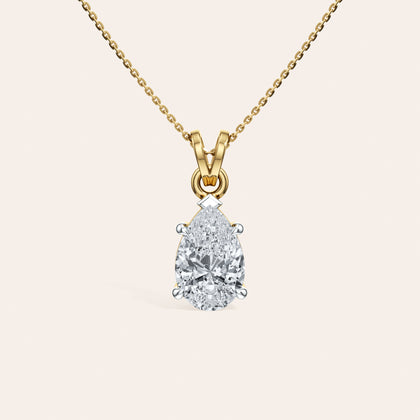
The Lumina Pendant
2.07 CT. T.W.PEAR$2,100.00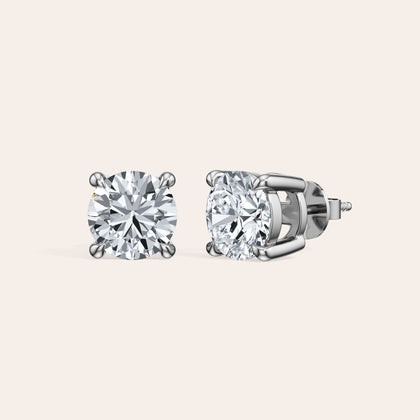
The Lumière Stud 1.5 CT
1.48 CT. T.W.ROUND BRILLIANT$1,080.00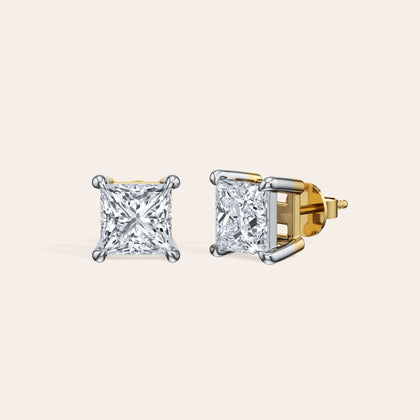
The Crest Stud
1.20 CT. T.W.PRINCESS$1,010.00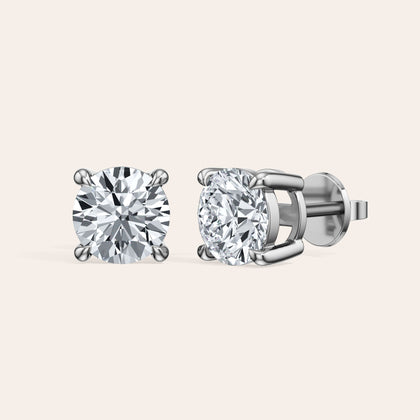
The Lumière Stud 2 CT
2.02 CT. T.W.ROUND BRILLIANT$1,400.00Complimentary shipping and free 14-day returns - decide with total peace of mind, at no cost.