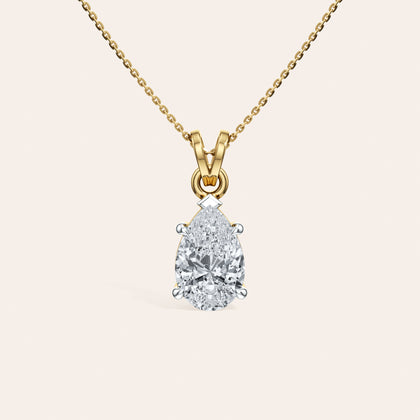
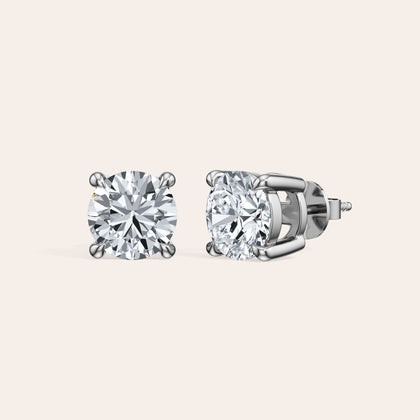
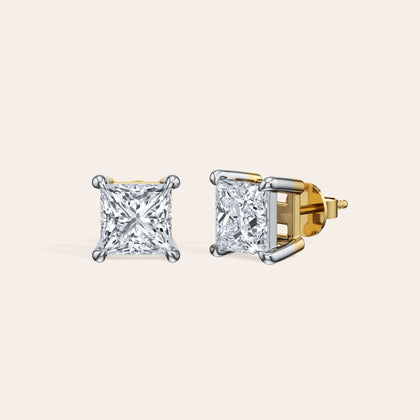
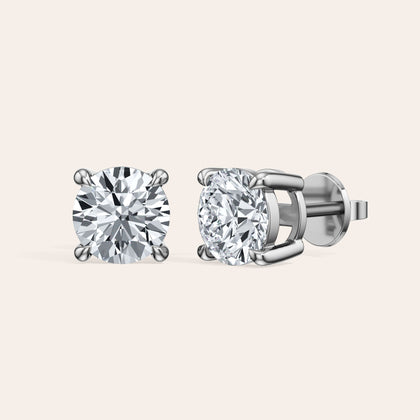
Diamond grading has four official variables: cut, colour, clarity, and carat weight. Of these, carat weight is the only one visible on the receipt. It's the number that gets mentioned at dinner. It's what the two-months-salary rule is calibrated around.
It's also, in terms of how a diamond actually looks on the hand, not the most important factor.
Within the ranges most buyers actually compare, cut quality often matters more for perceived size than the weight difference itself. A well-cut diamond reflects light so efficiently that it appears larger than a poorly-cut stone of equal weight. Conversely, a diamond cut too deep or too shallow will retain carat weight (it has more mass) but lose the light performance that makes it appear brilliant - it will look smaller and duller than a lighter, better-cut stone.
Beyond cut, setting affects perception significantly. A diamond in a low bezel setting with thick metal surrounding it looks smaller than the same diamond in a slender prong setting that exposes the stone's edges. The metal is covering the stone's footprint.
Finger shape matters too. A longer, more spread stone - like an oval or marquise cut - can make a finger appear slimmer and the stone appear larger. A round brilliant on the same finger shows less spread.
The practical implication: if you're optimising for how a diamond looks, not just how it grades on paper, a well-cut 0.90 carat diamond in a fine prong setting will often appear larger than a 1.10 carat stone with a mediocre cut in a heavy bezel. Design a diamond engagement ring in our Ring Builder or diamond stud earrings - every stone is graded on cut quality, not just carat weight.
The number matters. But it doesn't tell the whole story.